

 Who We Are
 Our Team
 Case Studies







How to do AI SEO yourself for more conversions
Half of all consumers now use AI tools like Google AI Overview, ChatGPT and Perplexity to find quick answers.
That’s a direct hit to organic website traffic.
Yet most businesses still rely on traditional SEO alone, unaware that a growing slice of their audience never makes it to the search results at all.
The good news? This guide explains how to appear in AI search results as the compelling solution to relevant queries – not just another listed option.
Why traditional SEO alone is no longer enough
Here’s what’s happening when someone searches for a service like yours.
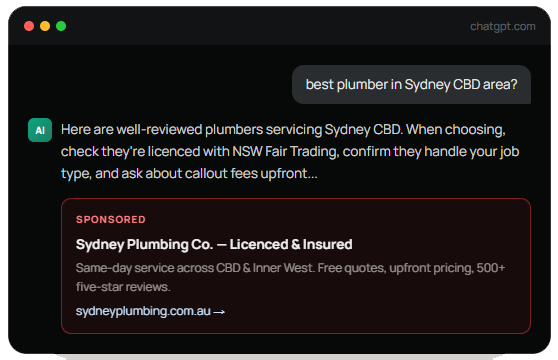
In Google, an AI Overview often answers the query so completely that users don’t need to scroll through organic results. In ChatGPT or Perplexity, the AI recommends two or three brands and that’s it, the search is over.
Does this mean traditional search is dead? Not at all.
Organic search is still King – attracting 99% of traffic according to this Search Engine Land article (September 2025).
Traffic is one thing, but what about conversions? That King loses influences over his subjects.
Here’s the challenge for businesses that rely on SEO: people trust AI-nominated brands more than the top ten websites in traditional searches. Research shows that AI-driven traffic converts 3 times higher than organic search traffic, at the very least!
That’s not a marginal difference.
And other studies found that AI conversion rates are even higher!
The takeaway: you need SEO, but it’s time to appear in AI search tools as well.

What is AI Search Optimisation?
AI Search Optimisation is the process of improving your website’s content, structure and online presence.
This enables AI tools to discover, understand and promote your brand as the best solution in platforms like Google Gemini, ChatGPT, Notebook, CoPilot and Claude.
Do you already have an SEO strategy in place?
This gives you an advantage. AI Optimisation builds directly on traditional SEO. The core principles are the same: be useful, be clear, and be trusted. What changes is the focus.
Traditional SEO targets keywords to rank in Google’s organic results for specific queries.
AI Search Optimisation targets questions and intent, so your brand is cited in conversational AI responses. Instead of competing for a spot in ten search results, you’re competing for a mention in two or three AI recommendations.Your brand stands out more!
Two specific approaches you’ll hear about:
- Answer Engine Optimisation (AEO) gets direct snippets of your content featured verbatim inside AI responses: the kind of answer an AI reads or displays as a highlighted extract.
- Generative Engine Optimisation (GEO) gets AI platforms to cite your website as a clickable source when generating their own answers, building both brand visibility and referral traffic.

The biggest mistake businesses make with AI SEO strategies
Most business owners who do adopt an AI strategy make one critical error: they focus on a single platform.
ChatGPT, Perplexity and Google AI Overview don’t operate the same way. Each favours different trust signals. If your brand appears in one platform, you may be invisible in the others.
Case in point: Averi’s research into 680 million citations found that only 11% of websites were cited by both Perplexity and ChatGPT, for example.
To connect with as many consumers as possible, your strategy needs to target every trust signal — not just one.
Here’s how the three main platforms differ:
Google AI Overview favours sources that already rank in Google’s top 10. Strong traditional SEO is your foundation. Add schema markup and answer-first content structure to increase your citation chances.
ChatGPT places more trust in consensus from the wider web (what other websites share). This is why you must create a uniform brand presence in online directories and review platforms.
Perplexity tends to favour websites that share updated information, including sources that users can visit by clicking the link. Update your content regularly, include the latest data, and structure it with clear headers.

7 steps to appear in AI responses
1. Lead with the answer
Most web content buries the main point. AI tools don’t have the patience for that. They scan for the clearest, most direct response to a query and surface it. Get to the point in your opening sentences, then use the rest of the piece to support and expand. Format your subheadings as genuine questions your customers ask, so your content lines up naturally with the conversational way people prompt AI tools.
2. Use schema markup to speak AI’s language
Your written content tells a story. Schema markup translates that story into something AI crawlers can process without guessing. Adding structured data to your pages removes ambiguity. AI systems know exactly what your business does, where you operate and what each piece of content covers.
The highest-impact schema types to prioritise:
- FAQ Page: ideal for service pages and blog posts that answer common questions
- Article: signals the nature and authorship of editorial content
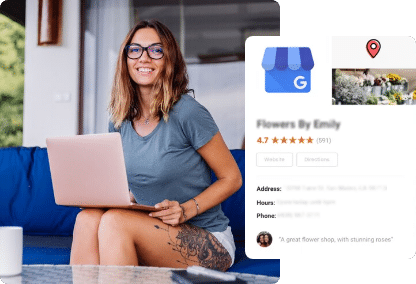
- Local Business: critical if you serve customers in a specific area
One rule: your markup must reflect what’s actually on the page. Mismatches between structured data and visible content undermine your credibility with AI systems. Validate everything with Google’s Rich Results Test before publishing.
3. Demonstrate real expertise, page by page
AI tools are trained to favour sources that show genuine knowledge, not just websites with strong overall domain metrics. Each piece of content needs to earn its own credibility. That means attaching real author names and credentials, citing up-to-date sources, and going deep enough on a topic that your content stands apart from surface-level competitors. A strong home page won’t carry weak articles.
4. Treat content as a living asset
Stale content is a quiet killer for AI visibility. AI tools (particularly Perplexity) actively favour recently updated material. Even small changes can signal freshness: swapping in a newer statistic, refining an example, or noting that a page has been reviewed recently. Scheduling regular content reviews (not just new posts) gives your existing pages a second life in AI results.
5. Cement your presence beyond your website
AI tools don’t form opinions about your brand from your website alone. They cross-reference the broader web: directories, review sites, social platforms, industry publications. The more consistently your business appears across those sources, the more confidently AI systems will recommend you.
Pay attention to keeping your name, contact details and business description uniform everywhere. Discrepancies between listings send mixed signals that quietly erode your authority.
6. Make sure AI crawlers can actually read your site
Getting your content right means nothing if AI bots can’t access it. Each major platform deploys its own crawler – and they can be inadvertently shut out by a poorly configured robots.txt file. It’s worth checking yours. Sites that rely heavily on JavaScript to render content can also cause problems, since many crawlers see a blank page rather than your actual copy. If that’s your setup, server-side rendering is worth exploring.
7. Write for the way people actually ask questions
Keyword research built for Google doesn’t capture the way people talk to AI tools.
When it comes to AI search, prompts tend to be longer, conversational and specific – often describing a situation rather than naming a thing. Think less “Sydney accountant” and more “what should a small business look for in an accountant?” Build content around those fuller questions: how-to guides, side-by-side comparisons and FAQ-style formats consistently earn the most citations across AI platforms.
Do you need separate strategies for SEO and AI Search Optimisation?
No. Traditional SEO and AI Optimisation share the same key techniques:
- Unique, relevant content that directly answers the query
- Clear structure: headings, short paragraphs, bullet points
- A user-friendly, fast-loading, mobile-friendly website
- Trust signals: backlinks and mentions from credible websites
If you already have a solid SEO strategy, you’ve done the heavy lifting. AI Optimisation is the natural evolution – building on what you’ve already established rather than replacing it.
Where to start this week
If you’re not sure where to begin, start here: Google your business and the services you offer.
Check what comes up across Google, ChatGPT and Perplexity. Does your brand appear? Do competitors show up instead? Is the information consistent across your website, Google Business Profile and social profiles?
That audit takes under 30 minutes and tells you exactly where to focus first. Then work through the seven steps above at your own pace. Most businesses haven’t started yet.
Acting now still gives you a real advantage that will be difficult for latecomers to match.
Prefer to leave it to our AI SEO agency?
AI search is evolving quickly, and keeping up takes time. If you’d rather have a team with 25 years of experience handle it for you, E-WEB Marketing offers AI SEO services built specifically for small and medium businesses.
Affordable prices, flexible contracts and no jargon.
Our Sydney-based team has helped over 3,000 businesses grow their online presence.
We’ve navigated every major shift in digital marketing, and we’re ready to guide you through this one too.
Book a free AI visibility check to see how your business performs in AI results, or call us on 1300 792 811.
