

 Who We Are
 Our Team
 Case Studies







How to appear in AI search results

It’s become harder to pull visitors from traditional search engines like Google.
Businesses like yours lose organic traffic because half of all consumers seek quick answers from AI tools like Google Overview, ChatGPT and Perplexity.
It’s a brave new world, sure, but you can navigate it for more traffic and conversions. This guide shows you how to appear in AI search results as the compelling SOLUTION to relevant queries. Become harder to resist, not just another listed option.
But first, we explain the changes!
AI search changes everything
What happens when you type a question into Google?
The AI Overview often grabs your attention from the top of the page – answering the query so well, you don’t need to browse the organic results to learn more.
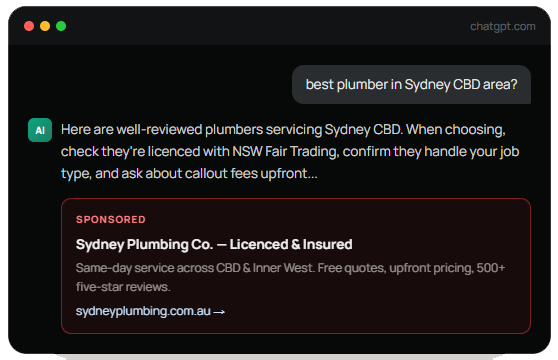
In another scenario, you ask ChatGPT to recommend a service provider. It names three businesses as the best, narrowing down the options so you don’t have to.
Your job is done, you can stay out of Google.
Does this mean SEO is dead? No. Despite getting less action, traditional searches continue to dominate the market. In fact, Google gives websites 345 times more traffic than all AI platforms combined.
But please, don’t rely solely on traditional SEO. It’s no longer enough as an isolated strategy.
Yes, even if you rank on page one!
Traditional search restrictions:
- Losing traffic: your website doesn’t attract as many visitors as it could because you compete for attention with two foes: AI responses that appear in one-third of Google searches AND other websites listed in the top-ten results.
- Fewer conversions because people trust AI responses more!
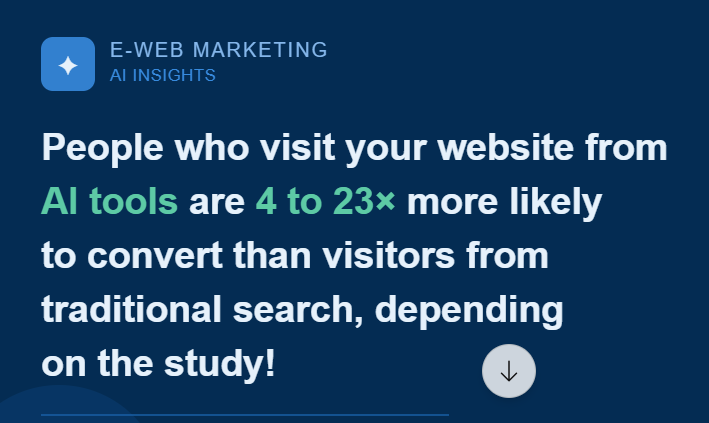
Let’s look at one of the many studies: AHREFS discovered their AI-referred traffic converted 23 times higher than organic search traffic.
In case you don’t know: conversions are desired actions your audience takes to meet your business goals – like buying products, sending an enquiry or subscribing to your newsletter.
This is why visitors from AI searches convert better
What happens when you ask ChatGPT or Perplexity to suggest a local dentist?
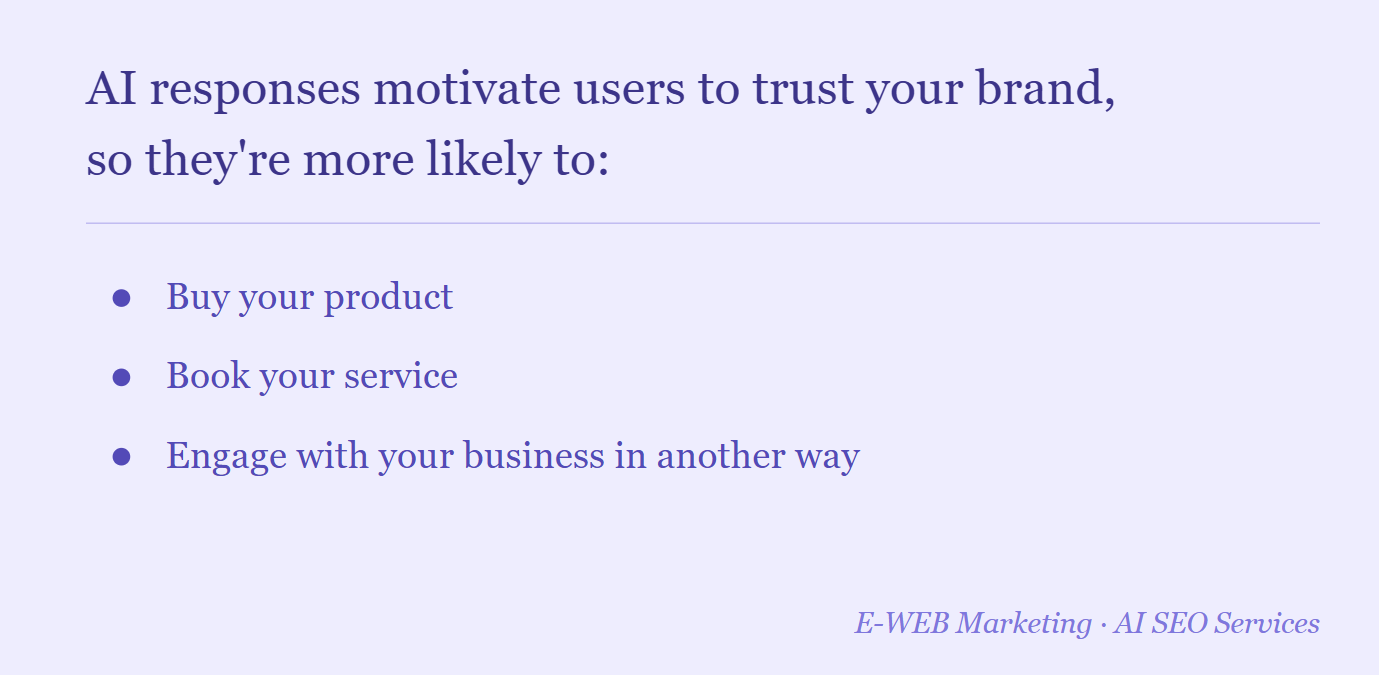
The AI only recommends a few brands as trustworthy SOLUTIONS. That’s it. The consumer isn’t overwhelmed by a long list of options that look similar.
What is AI Search Optimisation?
AI Search optimisation is the process of improving the content, navigation and networking capabilities of your website to help AI technology find, interpret and trust your brand. This motivates AI tools to promote your brand as the best solution in responses to your audience:
- AI tools in traditional search engines (e.g. Google AI Overview)
- External AI programs like ChatGPT, Claude and Perplexity
SEO and AI Optimisation: same principles, different focus
Do you already have a solid SEO strategy in place?
Good news: you’ve done the heavy lifting for AI Optimisation, which is the evolution of SEO.
Traditional SEO and AI Search Optimisation share key techniques for getting noticed online. It’s all about building trust with consumers and technical algorithms.
- Be useful: answer the query in a clear manner
- Easy navigation: maintain a user-friendly website
- Networking: establish links with credible websites and engage on social media
This is what trust signals look like in more detail:
- Helpful content: original writing that directly answers the search query with naturally incorporated keywords.
- Clear structure: headings, short paragraphs and bullet points for easy scanning by both humans and algorithms.
- Site functionality: fast loading times and a simple, mobile-friendly design.
- Structured data: schema markup to give search engines and AI tools explicit context about your content.
- Brand authority: backlinks from credible websites signal trustworthiness to both traditional search and AI tools.
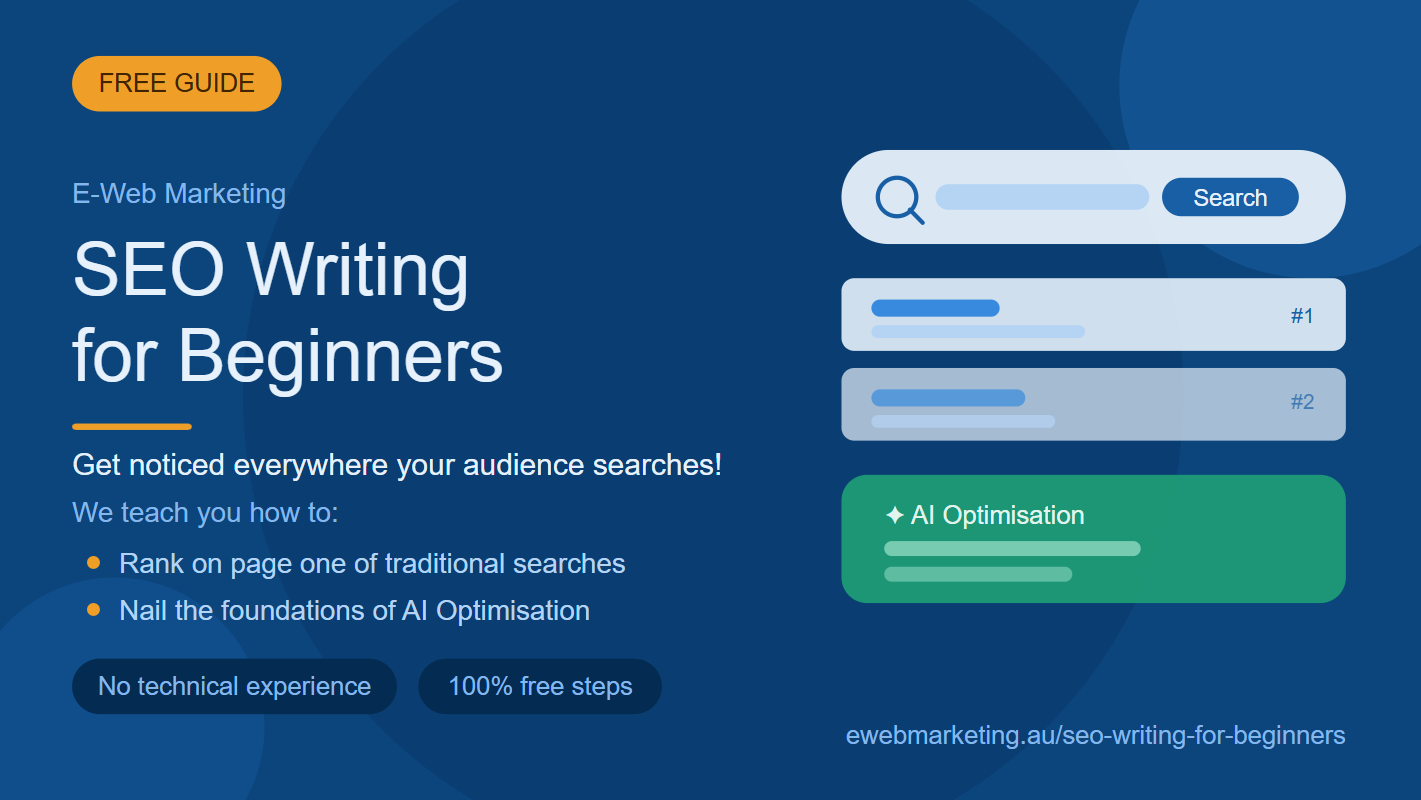
SEO Writing for Beginners (free techniques): Follow our guide to get your business noticed in traditional searches. But that’s not all: these techniques lay the groundwork for promoting your website in AI responses, too.
What does AI Optimisation do differently? It adds two new strategies to traditional SEO foundations
Answer Engine Optimisation (AEO) focuses on getting direct snippets of your content featured inside AI responses – the kind of answer an AI reads aloud or displays as a highlighted extract. Think of it as winning the AI equivalent of a featured snippet.
Generative Engine Optimisation (GEO) focuses on getting AI platforms to cite your website as a source when generating their own answers – so users see your brand name and click through to your content. This builds visibility and referral traffic simultaneously.
| Traditional SEO | AI Search Optimisation | |
| Goal | Rank pages in search results | Featured in AI answers |
| Targeting | Keywords | Questions & intent |
| What you measure | Rankings & clicks | Visibility, citations & brand mentions |
| Competition | 10 results per page | 2–3 brands per AI response |
✅ Already investing in SEO?
Great, you have a head start. Strong SEO fundamentals directly support AI optimisation. The E-Web team builds on your existing strategy rather than replacing it. We add targeted AI improvements that extend your reach across every platform your audience uses.

Diving deeper into AI Search: your strategy must be big enough to target different programs
ChatGPT, Perplexity and Google Gemini are the main AI search platforms, but they don’t operate the same way.
Each program focuses on different trust signals when choosing a website to promote in responses.
Many business owners don’t realise this. They mistakenly adopt a limited AI strategy – restricting their visibility to one platform. Look at Passionfruit’s analysis of 15,000 queries: only 12% of domains appear across ChatGPT, Google Gemini and Perplexity.
How do you connect with as many consumers as possible? Your comprehensive strategy must target EVERY trust signal that appeals to the biggest AI programs. Leave no stone unturned!
Google AI Overviews
Schema + existing rankings
This AI tool favours sources from Google’s top 10. Strong traditional SEO is your foundation here. Add schema markup and answer-first content structure to increase citation likelihood. A top-ranking page has a 58% chance of being cited in Google AI summaries. Not bad!
ChatGPT Search
Third-party consensus
ChatGTP places a higher degree of trust in what the wider web agrees on. Consistent brand presence across review platforms, directories and industry publications signals credibility. Bing rankings matter here. Your Google Business Profile and LinkedIn page feed directly into how ChatGPT perceives your authority.
Perplexity
Freshness + expert depth
Perplexity excels at pulling the latest information and sharing direct source citations with clickable links. It’s wise to update your content weekly and include the latest data. Perplexity also rewards structured headers, original data, expert quotes and community discussions on Reddit and Quora.

How to appear in AI Search results? 7 tips
1. Write answers first, content second
AI engines are built to extract clear, direct answers from content. Open each piece with a concise 2 to 4 sentence response to the primary question before expanding into detail. Structure your headings as the actual questions your customers ask. When a user’s query matches your H2, you’re positioned directly for that citation.
2. Add schema markup to key pages
Schema markup is structured data that tells AI crawlers exactly what your content means, not just what it says. Content with proper schema shows higher AI visibility. Start with FAQ schema on service and blog pages, Article schema on editorial content, and LocalBusiness schema for location-based searches. These are free to implement and produce the fastest gains across all three major AI platforms.
3. Build genuine E-E-A-T signals
Experience, Expertise, Authoritativeness, and Trustworthiness are the trust signals that get websites cited in AI. In practice: named authors with real credentials on every article, references to primary sources and recent data, expert quotes and a content history that demonstrates genuine depth. Every individual page needs its own trust signals, domain authority alone isn’t enough.
4. Keep your content fresh
Content updated within 30 days gets cited 3.2 more times in multiple AI tools. Even minor updates (a new statistic, a refreshed example, an updated publication date) can significantly improve your citation chances. Build a quarterly content refresh cycle alongside your new content creation.
5. Build your brand across the open web
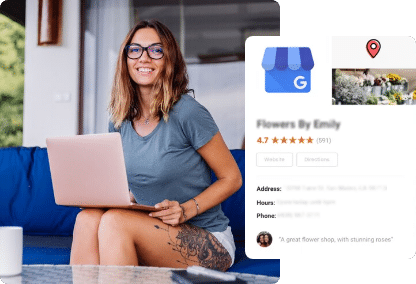
ChatGPT is heavily influenced by third-party consensus. Your Google Business Profile, industry directories, LinkedIn and review platforms like G2 feed directly into how AI models perceive your authority. Consistent name, address, phone number and business description across every platform strengthens these signals. Inconsistency is a red flag to AI systems.
Our local SEO checklist includes a step-by-step guide for setting up local citations.
You can find the top free business listing sites in Australia here.
6. Make your site technically AI-accessible
AI platforms send their own crawlers to your site: ChatGPT uses GPTBot, Perplexity uses PerplexityBot. Check these aren’t accidentally blocked by your robots.txt file. JavaScript-heavy sites that load content dynamically may appear blank to AI crawlers. Server-side rendering ensures your content is visible to every bot that visits.
7. Target conversational, intent-rich queries
Between 65% and 85% of ChatGPT prompts have no matching keyword in traditional search databases, according to a recent Semrush study.
People ask AI tools questions the way they’d ask a colleague – in full sentences, with context. Create content that covers the full arc of your customer’s research: FAQ sections, comparison guides and “how-to” formats are consistently among the top-cited content types across all AI platforms.

No time to handle your own digital marketing? Our AI SEO agency can do it for you from Sydney!
E-Web Marketing has survived two decades because we successfully adapted to the internet’s biggest shifts.
AI search is the latest of those shifts, and we’re ready to guide you through it.
Our team has helped over 3,000 businesses grow their online presence. We specialise in smart, cost-effective strategies for small and medium businesses.
Here’s what you can expect from us:
- Straightforward pricing
- Flexible, no lock-in contracts that evolve with your business
- Clear and honest communication
- Regular updates from a dedicated expert in your corner
- Award-winning services: we’re finalists at the Asia-Pacific Search Awards
Call us on 1300 792 811 to find out how we can promote your brand in trusted AI responses.